
Uncategorized
Mushroom Chocolate Bar: What Adults Should Know
Sep
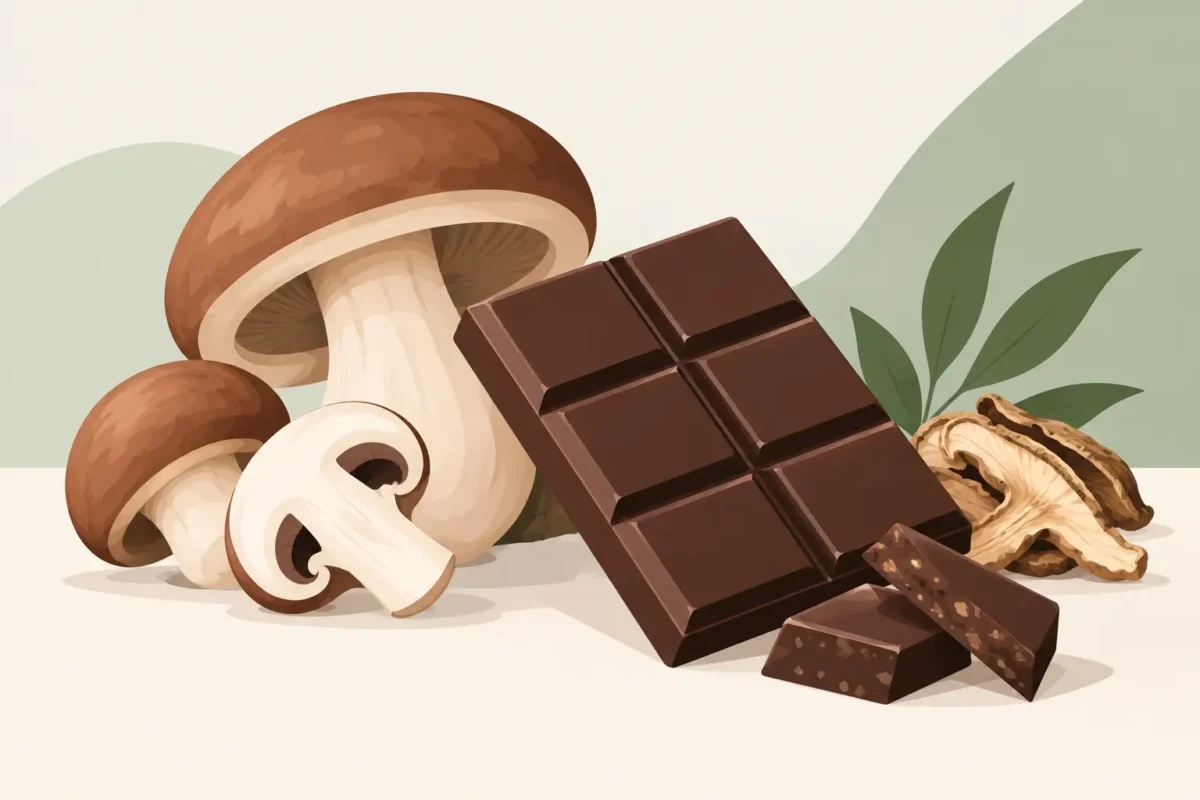
A mushroom chocolate bar can look like an ordinary candy bar, but that familiar wrapper can hide a very unfamiliar experience. Chocolate is easy to recognize, easy to share, and easy to underestimate. When psychoactive ingredients are involved, appearance is not proof of contents, quality, legality, or safety.
For adults who are curious about mushroom edibles, the straight answer is this: the biggest risks often come from uncertainty. A polished package, a bold potency claim, or a trendy flavor does not confirm what is actually inside. Treat every product claim with caution, especially when the ingredient list is vague or the source cannot provide credible, batch-specific information.
What Is a Mushroom Chocolate Bar?
The phrase “mushroom chocolate bar” is used for several very different products. Some bars contain culinary mushrooms such as lion’s mane, reishi, cordyceps, or chaga. These are generally sold as food or supplement-style ingredients and are not intended to create psychedelic effects.
Other products are marketed as containing psilocybin mushrooms or other psychoactive compounds. Those products are a different category entirely. Their effects may include shifts in perception, mood, thinking, time awareness, and sensory experience. Effects can also include anxiety, confusion, nausea, panic, impaired judgment, and distressing reactions, particularly in an unfamiliar setting or when someone takes more than expected.
Then there are bars that use mushroom branding without clearly identifying the active ingredient. Some may contain no psychedelic mushroom material at all. Others may contain unlisted compounds. That ambiguity is not a minor labeling issue. It is the central safety issue.
Why Chocolate Changes the Risk Picture
Chocolate makes a psychoactive edible feel casual. It also makes it easier for someone to confuse it with regular food, leave it where a child or pet can reach it, or consume more than intended. A segmented bar can suggest that each square is consistent, but without reliable manufacturing controls, there is no reason to assume equal distribution of any active ingredient.
Edibles can also create a false sense of patience. People may not feel the effects right away, assume nothing is happening, and make a decision they later regret. Individual responses vary based on the substance involved, food intake, body chemistry, mental state, medications, and the environment. There is no package design that removes those variables.
A familiar format does not make an unfamiliar substance predictable. That is the point worth holding onto.
Mushroom Chocolate Bar Labels Can Be Misleading
A label should answer basic questions clearly: what ingredients are present, who made the product, where it was made, what batch it came from, and whether it has been independently tested. If those answers are missing, incomplete, or replaced with vague marketing language, that is a reason to step back.
Be especially skeptical of claims such as “legal everywhere,” “completely safe,” “lab tested” without an accessible report, or “proprietary mushroom blend” with no meaningful ingredient detail. A test result is only useful when it is connected to the exact batch in hand and identifies what was tested. A generic certificate, a copied image, or a claim on a wrapper is not the same thing as verification.
Packaging can be copied. Brand names can be reused. Product photos can make an item appear more established than it is. Strong retail language should never substitute for transparent information.
The lack of clear labeling also makes medical risk harder to assess. If someone has an adverse reaction, emergency clinicians need accurate details about what was consumed. “A mushroom bar” is not enough information when the actual active compound is unknown.
Legality Depends on the Ingredient and Location
In the United States, legal status is not determined by whether something is sold as chocolate, a wellness product, or a mushroom item. It depends on the actual substance, the jurisdiction, and the specific circumstances. Psilocybin remains illegal under federal law, even though some cities and states have changed local enforcement priorities or created limited programs.
That patchwork creates confusion. Decriminalization is not the same as retail legality. A local policy change is not permission to transport a controlled substance across state lines. Online claims that a psychoactive edible is broadly legal should be treated as advertising, not legal advice.
Culinary and functional mushroom chocolates are a separate matter, but even those deserve scrutiny when they make disease-treatment claims or fail to identify their ingredients. “Natural” does not automatically mean regulated, safe for everyone, or appropriate alongside prescription medication.
Who Should Be Especially Careful
Psychoactive products are not a low-stakes experiment for everyone. People with a personal or family history of psychosis, schizophrenia, bipolar disorder, or severe dissociation may face elevated mental health risks. People who are pregnant, breastfeeding, managing a heart condition, or taking psychiatric, stimulant, sedative, or other prescription medications should speak with a qualified clinician instead of relying on internet product claims.
Mixing substances raises the risk further. Alcohol, cannabis, stimulants, sedatives, and unknown edibles can complicate judgment and make an adverse experience harder to manage. If the goal is to understand how a product affects someone, combining it with other substances produces more uncertainty, not more insight.
Mental state matters too. A person who is overwhelmed, grieving, sleep-deprived, or already experiencing intense anxiety is not in an ideal position to add an unpredictable psychoactive experience. Psychedelic branding often focuses on novelty and mood. It rarely gives equal attention to vulnerability, context, or aftereffects.
Practical Safety Starts Before Anything Happens
The safest choice with an unlabeled or questionable mushroom chocolate bar is not to consume it. If an adult chooses to use any psychoactive substance despite the risks, a few boundaries can reduce the chance of immediate harm: avoid driving, swimming, cooking, heights, public conflict, and major decisions. Keep the product secured away from children, pets, and anyone who may mistake it for ordinary candy.
Do not pressure another person to participate. Do not surprise someone with an edible. Consent requires knowing what the substance is, what the expected effects are, and what the legal and health risks may be. That standard matters even among close friends.
If a person becomes severely agitated, confused, unresponsive, has chest pain, has a seizure, struggles to breathe, or may harm themselves or someone else, seek emergency help immediately. Be honest with responders about what was taken, even if the information is incomplete. Medical teams are there to treat the emergency, not to judge the story.
For a difficult but non-emergency experience, reduce stimulation, move to a calm and physically safe environment, speak slowly, and stay with a trusted sober person. Arguing about what someone is perceiving usually makes fear worse. Reassurance, hydration when safe, and time are often more useful than confrontation.
The Real Standard Is Transparency
A mushroom chocolate bar should not get a free pass because it looks premium, tastes good, or uses language associated with wellness. The more a product asks someone to trust a mystery ingredient, the less trust it has earned.
Adults deserve clear labeling, truthful claims, realistic discussion of risks, and the space to say no when the information is not there. Curiosity is normal. Blind confidence in an unknown edible is not. When the wrapper cannot tell the full story, the smartest move is to leave it closed.

