
Uncategorized
Mushroom Spores: What They Are and Why They Matter
Sep
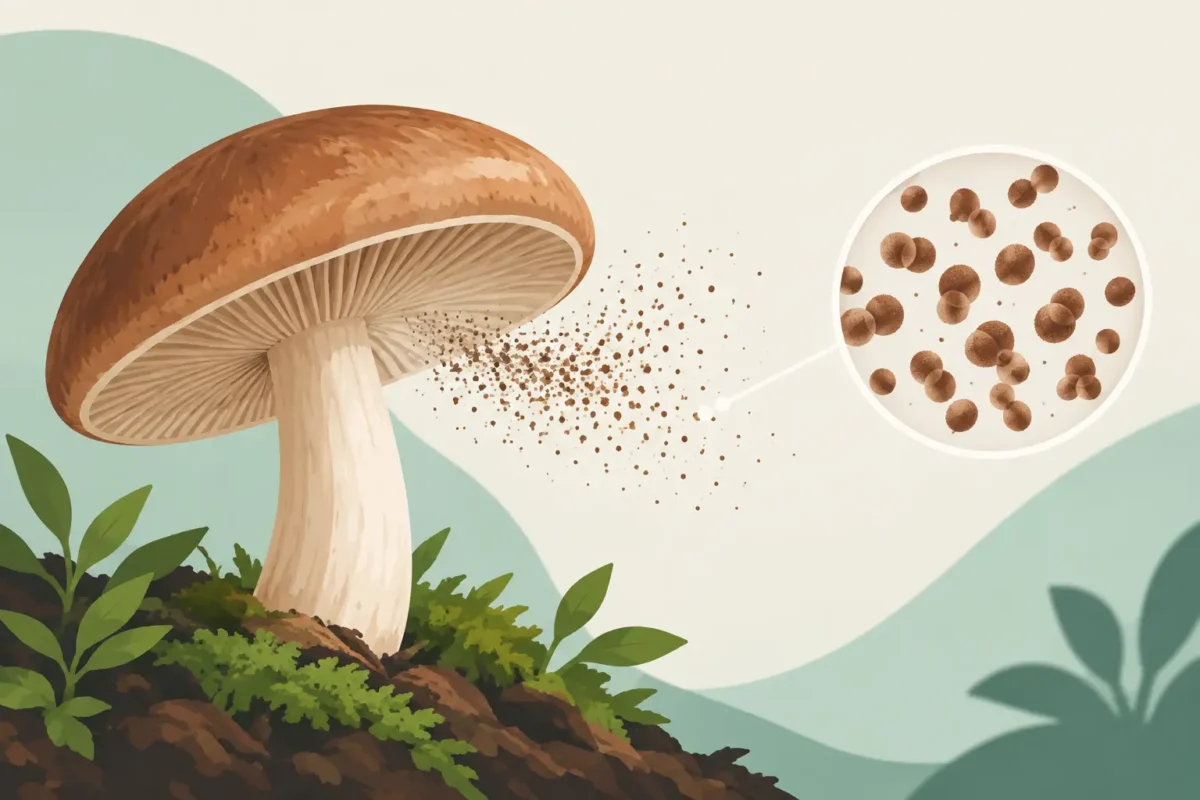
A mushroom cap can release millions of mushroom spores without anyone noticing. These dust-like reproductive cells are everywhere in the natural world – moving through air, water, soil, and the fur of passing animals. They are small, durable, and scientifically fascinating. They are also commonly misunderstood, especially when people confuse spores with the mature mushrooms that may eventually develop from them.
For anyone interested in fungi, microscopy, or the science behind different mushroom varieties, spores offer a close look at how fungal life begins. But this is one area where the details matter. Species identification, local law, responsible handling, and honest expectations should always come before hype.
What Are Mushroom Spores?
Mushroom spores are reproductive cells produced by fungi. Think of them as the fungal equivalent of seeds, with one major difference: spores are usually microscopic and are formed in massive numbers. A single mushroom can produce an extraordinary amount of spores during its lifetime, increasing the odds that some will land in a place where they can survive.
Not every fungus makes the familiar stem-and-cap mushroom seen in a forest or grocery store. The visible mushroom is simply the fruiting body of a larger fungal organism, often made up of a threadlike network called mycelium. Spores are released from that fruiting body as part of the fungus’s reproductive cycle.
Their color, shape, size, texture, and internal features can vary widely by species. Under a microscope, these differences can help trained observers distinguish one group of fungi from another. That is why spore prints, prepared microscope slides, and other lab materials remain popular tools for mycology education.
Spores Are Not the Same as a Mushroom
This distinction is worth making clear. A spore is not a mature mushroom, and it does not have the same composition as a fully developed fruiting body. The effects, legal status, and risks associated with any mushroom depend on the species and its active compounds, not on vague product labels or internet claims.
People often use the word “spores” as shorthand for a particular kind of mushroom, but fungi are a huge kingdom. There are edible mushrooms, medicinally researched mushrooms, toxic mushrooms, environmental decomposers, plant pathogens, and countless species still being studied. Treating all mushroom spores as if they are interchangeable is a fast route to bad information.
Why Mushroom Spores Matter in Mycology
Spores are a major part of how fungi spread, adapt, and persist. Fungal spores can travel short distances or cross continents on air currents. Some are released only when humidity changes. Others rely on rain splashes, insects, or animals. This flexibility helps fungi colonize new environments and recycle organic material across forests, grasslands, farms, and cities.
For researchers and hobbyist microscopists, spores can reveal useful clues about fungal classification. A spore print – the visible deposit left when a mushroom releases spores onto a surface – may be white, cream, pink, brown, purple-brown, rust-colored, or black. Color alone cannot confirm a species, but it can narrow the field when combined with other traits.
Microscopic examination goes further. Scientists may assess spore dimensions, wall thickness, ornamentation, pore structures, and reactions to certain staining methods. These details are not glamorous, but they are the kind of evidence that separates genuine observation from guesswork.
Mushroom spores also matter beyond collecting and identification. Fungi support healthy ecosystems by breaking down dead material, cycling nutrients, forming partnerships with plants, and influencing soil health. Understanding their reproductive systems helps scientists study biodiversity, agriculture, forest ecology, and climate-related environmental change.
Spore Prints, Syringes, and Lab Specimens
Different spore formats serve different purposes. A spore print is typically used for observation and identification. It can be a useful visual record of a specimen’s reproductive traits, though it should never be treated as proof that a mushroom is safe to eat or correctly identified.
Spore syringes are generally described as suspended spores in sterile water. In legitimate laboratory and microscopy contexts, they may be used for educational observation or research involving legal species. Quality depends on accurate labeling, appropriate storage, cleanliness, and transparency about intended use.
Prepared slides are often the simplest option for beginners who want to see fungal structures without handling loose material. They are also useful for classrooms and home microscope setups. A properly prepared slide can show students that a mushroom is not just a food item or a forest object – it is part of a complex biological system.
Be skeptical of anyone promising that a spore product guarantees a certain outcome. Biology does not work on guarantees. Labels can be inaccurate, samples can be contaminated, and identification can be wrong. Serious mycology starts with documentation, patience, and respect for uncertainty.
The Legal Reality Around Mushroom Spores
The legal status of mushroom spores in the United States is not something to assume. It depends on the species, the state, the intended use, and the specific laws that apply where you live. Some spores may be sold or possessed for microscopy or taxonomy in certain jurisdictions, while activity involving controlled mushroom species may be prohibited, especially when connected to cultivation or production.
State and local laws can be stricter than federal law. Rules also change. A claim that something is “legal” because it is sold online is not a legal defense, and a vague disclaimer does not erase a buyer’s responsibility. If the legal status of a species or product is unclear, do not rely on social media comments, anonymous forums, or aggressive sales copy.
The practical rule is simple: know the law in your location before ordering, possessing, transporting, or using any mushroom-related material. If you need a legal answer, consult an official state resource or a qualified attorney. That may not be the exciting answer, but it is the smart one.
Safety Starts With Identification
Wild mushroom identification is not a casual guessing game. Some toxic mushrooms closely resemble edible varieties, and mistakes can cause serious illness or death. A photo, a color description, or a single feature such as a spore print is not enough to establish that a mushroom is safe.
Never consume a wild mushroom based on an online comparison or a seller’s marketing language. Avoid mixing mushroom materials with alcohol, prescription medication, or other psychoactive substances without qualified medical guidance. People with a personal or family history of psychosis, bipolar disorder, severe anxiety, or certain heart conditions should be especially cautious around psychoactive substances and should speak with a licensed health professional.
Keep all mushroom specimens, spores, and lab supplies clearly labeled and away from children and pets. Clean work surfaces after handling samples. If accidental ingestion or poisoning is suspected, contact Poison Control or seek urgent medical help immediately.
Better Questions to Ask Before You Buy or Handle Spores
The best question is not “What is the strongest option?” It is “What exactly is this, and what evidence supports that answer?” Ask whether the species name is complete and correctly spelled, whether the material is intended for lawful microscopy or education, and whether the supplier provides clear, consistent labeling.
Also ask what you are actually trying to learn. If your goal is fungal science, a basic microscope, field guide, prepared slides, and carefully documented legal specimens may teach you far more than anonymous products with oversized claims. Real knowledge is built through observation, not hype.
A More Grounded Way to Approach Fungal Curiosity
Mushroom spores are remarkable because they make fungal life visible at its smallest scale. They connect a mushroom on the forest floor to ecology, classification, reproduction, and scientific curiosity. That is plenty interesting without pretending every spore is a shortcut to a particular experience.
Approach mushroom spores with a clear head: verify the species, respect the law, use proper handling practices, and let evidence lead the way. The most worthwhile part of mycology is not rushing toward a claim – it is learning to see what is actually there.

