
Uncategorized
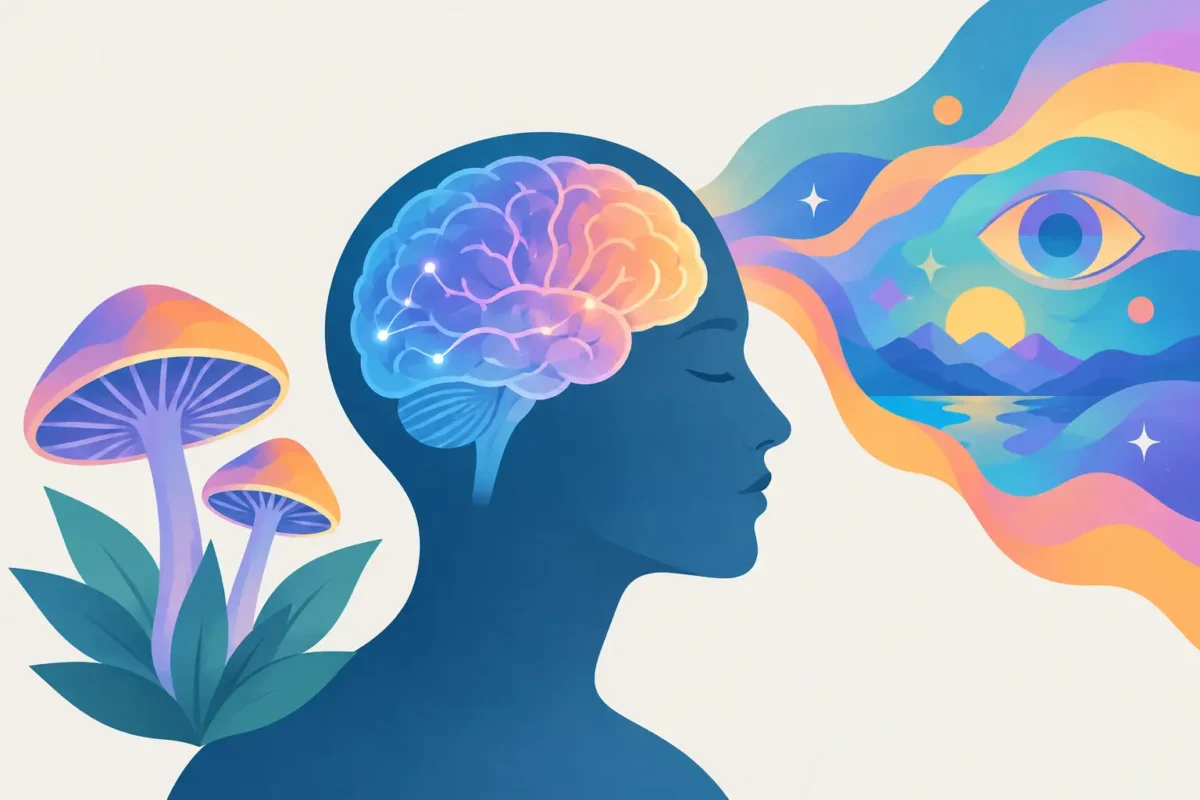
How Psychedelics Affect the Brain and Perception
Sep
A psychedelic experience can make a familiar song feel enormous, turn a passing thought into a life-sized idea, or make minutes seem to stretch. That is not simply imagination running wild. How psychedelics affect the brain involves measurable changes in chemical signaling, perception, attention, and the way brain networks communicate. The experience can feel deeply meaningful, but meaningful does not automatically mean medically safe, universally helpful, or predictable.
How Psychedelics Affect the Brain at the Receptor Level
Classic psychedelics such as psilocybin, LSD, DMT, and mescaline primarily act on serotonin systems. More specifically, their effects are strongly associated with the 5-HT2A receptor, a serotonin receptor found throughout areas of the brain involved in perception, cognition, and sensory processing.
Serotonin helps regulate mood, sleep, appetite, and the filtering of incoming information. When a classic psychedelic activates certain serotonin receptors, the brain may process sensory input and internal thoughts differently. Colors can appear more vivid, patterns may seem to move, music can feel unusually personal, and ordinary associations can become surprising or intense.
This does not mean the brain is receiving more accurate information. In many cases, it is assigning more weight, novelty, or emotional significance to information that would normally be filtered out. That shift can produce wonder, insight, confusion, or fear depending on the person, the substance, the amount taken, and the setting.
Not every drug sold under a psychedelic label works the same way. Ketamine mainly affects glutamate signaling through NMDA receptor blockade. MDMA has major effects on serotonin, norepinephrine, dopamine, and hormones related to social connection. THC acts largely through the endocannabinoid system. These substances may overlap in how they alter mood or perception, but they should not be treated as interchangeable.
Brain Networks Become Less Rigid
The brain is not one single control panel. It is a collection of networks that constantly coordinate attention, memory, movement, emotion, and self-awareness. One frequently discussed network is the default mode network, which is active during self-reflection, daydreaming, autobiographical thinking, and the ongoing inner story many people experience as “me.”
During a psychedelic state, communication within and between networks can become less fixed. Brain regions that usually operate in more separate patterns may exchange information in unusual ways. Researchers sometimes describe this as increased global connectivity or greater network flexibility.
That flexibility may help explain why people report fresh perspectives, unusual associations, vivid mental imagery, and a temporary loosening of habitual thought loops. Someone who normally sees a problem from one angle may suddenly connect it to emotion, memory, body sensations, or relationships. The same effect can also make it harder to tell which ideas are useful and which ideas only feel profound in the moment.
The popular claim that psychedelics “turn off the ego” oversimplifies what is happening. Some people experience reduced self-focus or a blurred boundary between themselves and the world. Others remain sharply self-aware but feel emotionally exposed. Ego dissolution is possible, not guaranteed, and can be peaceful for one person while frightening for another.
Perception Changes Because Filtering Changes
The brain constantly predicts what it expects to see, hear, and feel. It uses past experience to sort a massive amount of sensory input into something manageable. Psychedelics appear to disrupt or relax parts of that filtering and prediction process.
This is one reason visual effects are not limited to seeing things that are not there. A wall may look as if it is breathing. Texture can become intensely detailed. Closed-eye imagery may emerge from memory, imagination, and sensory activity. Sound can take on shape, color, or physical presence. Time can feel slow, fragmented, or circular.
Emotions can also become louder. A small worry may feel overwhelming, while gratitude, awe, connection, or grief may arrive with unusual force. The experience can bring unresolved material to the surface, but there is no guarantee that surfacing material leads to resolution. Sometimes it creates clarity. Sometimes it creates distress that needs time, support, or professional care to work through.
Why Set and Setting Can Change Everything
The same substance can lead to very different experiences because the brain does not respond in a vacuum. “Set” means a person’s mindset, expectations, current stress level, mental health history, and intentions. “Setting” means the physical and social environment: who is present, whether the space feels safe, how much stimulation is around, and whether there is pressure to perform or keep up.
A person who is exhausted, grieving, anxious, or in conflict may be more vulnerable to a difficult experience. An unfamiliar place, a crowded party, unexpected noise, or being around people who do not feel trustworthy can amplify panic and confusion. Privacy matters to many adults, but privacy should not mean isolation during an intense or unpredictable altered state.
There is also no reliable way to judge a product’s actual contents by branding, appearance, or a seller’s claim. Mislabeling and unexpected potency remain real concerns in unregulated markets. A chocolate, gummy, blotter, powder, or cartridge can carry different risks because the contents, concentration, and onset may not be what a buyer assumes.
Potential Benefits Are Still Being Studied
Interest in psychedelic research is not hype from nowhere. Controlled studies are examining whether some psychedelic-assisted treatments may help certain people with depression, trauma-related symptoms, substance-use disorders, end-of-life distress, and other conditions. The key words are controlled, screened, and assisted.
Clinical research generally involves carefully selected participants, known substances, preparation, monitoring, and follow-up. That is very different from self-directed use, especially when a person is struggling with severe symptoms or takes other medications. Early findings are promising in some areas, but they are not a blanket approval for every product, every condition, or every person.
Psychedelics may increase psychological openness for a limited period after an experience. That can support reflection and behavior change, but it can also leave someone impressionable, emotionally raw, or too certain about a major decision. Avoid making irreversible choices while still processing an intense experience.
Real Risks Need a Straight Answer
Psychedelics are not physically addictive in the same pattern as opioids or stimulants, but “not typically addictive” is not the same as harmless. Psychological overuse, risky behavior, panic, accidents, and impaired judgment can still happen. Repeated use can also become a way of avoiding problems rather than addressing them.
People with a personal or family history of psychosis, schizophrenia, or bipolar disorder may face a higher risk of serious psychiatric complications. Psychedelics can potentially trigger mania, paranoia, prolonged anxiety, or psychotic symptoms in vulnerable individuals. Anyone with those risk factors should speak with a qualified medical professional rather than relying on internet reassurance.
Mixing substances raises uncertainty fast. Alcohol, cannabis, stimulants, antidepressants, prescription medications, and other psychoactive drugs can change effects or complicate risk. Some combinations can increase confusion, strain the body, or make it harder to recognize when a situation is becoming unsafe.
A difficult experience is not always an emergency, but certain signs require immediate help: chest pain, seizures, loss of consciousness, dangerous overheating, severe agitation, threats of self-harm, violence, or confusion that does not settle. In the US, call 911 or seek urgent medical care. Be honest with medical staff about what may have been taken so they can treat the situation properly.
The Bottom Line for an Informed Adult
The brain effects of psychedelics are powerful because they can temporarily change how the mind filters reality, organizes memory, feels emotion, and maintains its usual sense of self. That is exactly why these substances attract curiosity – and exactly why casual claims of guaranteed healing, total safety, or universal insight should raise a red flag.
Respect the uncertainty. A powerful experience can be beautiful, challenging, confusing, or all three at once, and the most responsible approach starts with clear information, realistic expectations, and a willingness to put health ahead of hype.

