Whatsapp: +1 601 781 3034 Email: psychedelicdiscreet@gmail.com

Legal Psychedelics in the USA: The Real Rules
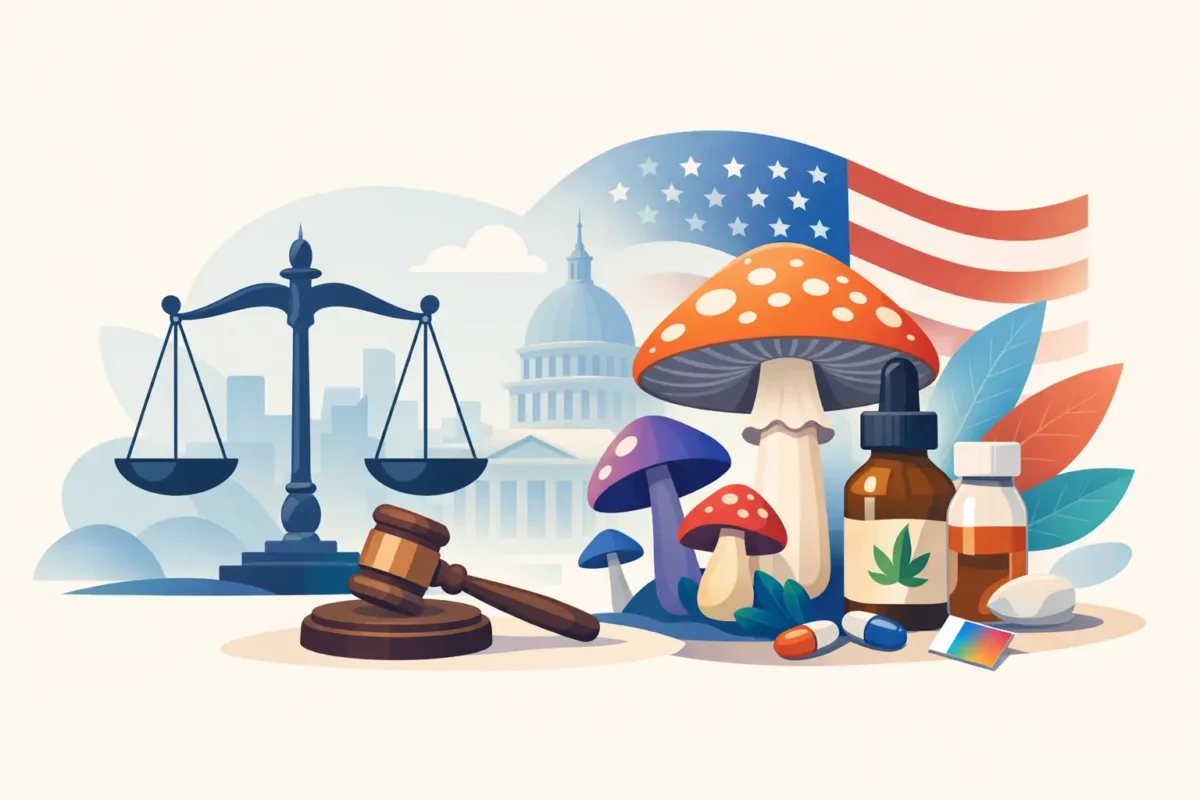
Legal Psychedelics in the USA: The Real Rules

A product label, a social-media post, or a website claiming nationwide delivery does not make a substance legal. For adults looking into legal psychedelics in the USA, the first rule is simple: legal status depends on the exact substance, the state and city, the reason it is being used, and whether federal law applies.

That can feel frustrating when the market uses broad phrases like “legal shrooms,” “legal DMT,” or “research products.” But these labels often blur major legal differences. A substance can be decriminalized without being legal to sell. It can be available in a clinical study without being approved by the FDA. It can be lawful under a narrow state program while remaining illegal to possess, ship, or sell across state lines.

No hype, no guesswork. Here is what the rules actually mean.

Legal Psychedelics in the USA Are a Narrow Category

At the federal level, most well-known classic psychedelics remain controlled substances. Psilocybin and psilocin, LSD, DMT, mescaline from peyote, MDMA, and ibogaine are generally listed in Schedule I under the federal Controlled Substances Act. That classification means federal law treats them as having no accepted medical use and a high potential for misuse, even though research and public policy debates are moving quickly.

Schedule I status has practical consequences. It means a state decision to decriminalize a substance does not automatically authorize commercial retail sales, interstate shipping, online purchasing, or mailing products through the postal system. Federal enforcement priorities can vary, but the underlying federal restriction does not disappear because a seller calls an item legal.

A few substances and settings sit outside that simple rule. Ketamine is a controlled prescription medication, not a federally legal over-the-counter psychedelic product. Esketamine is an FDA-approved prescription treatment used under specific medical requirements. Some religious organizations may seek legal protections for sincere sacramental practices, but that is not a blanket public exception for buying or selling controlled substances.

Decriminalized Is Not the Same as Legal

This is where most confusion starts. Decriminalization usually means a jurisdiction has reduced penalties or made enforcement a low priority for certain personal activities. It does not necessarily create a regulated marketplace. It also does not mean every related activity is permitted.

For example, a local policy might reduce penalties for personal possession of certain natural psychedelics. That same policy may still leave manufacturing, commercial sales, driving while impaired, distribution to minors, and public consumption prohibited. State laws can also override or limit city-level changes.

Legalization is different. A legalized system normally creates explicit rules around who may provide a substance, where services can happen, age limits, testing, licensing, taxes, packaging, and enforcement. Even then, the program may be limited to supervised services instead of take-home retail products.

The distinction matters because “decriminalized” is often used in advertising as if it means “safe to order anywhere.” It does not. Buyers should treat that claim as a prompt to verify the actual law, not as proof.

Where Psilocybin Laws Have Changed

Oregon created a regulated psilocybin services framework for adults 21 and older. Its model is based on licensed service centers, trained facilitators, and supervised sessions. It is not a broad authorization for ordinary retail mushroom sales, personal shipment, or recreational use anywhere in the state.

Colorado has also passed statewide natural medicine reforms. The legal framework is more permissive than most states for certain personal-use activities involving specified natural medicines, but it still has boundaries. Commercial activity is regulated, access can be location-specific, and federal law continues to apply.

Several cities have adopted deprioritization or decriminalization policies involving entheogenic plants and fungi. Those policies differ sharply from one place to another. Some apply only to enforcement priorities. Some exclude sales. Some have been changed, challenged, or limited after passage.

The practical takeaway is direct: never assume that a headline about Oregon, Colorado, or a particular city applies to your address, your intended activity, or a package crossing state lines.

Psilocybin spores require extra care

Mushroom spores are often discussed separately because spores generally do not contain psilocybin or psilocin. In some jurisdictions, possession for microscopy or taxonomy may be treated differently from possession of cultivated psychedelic mushrooms. That does not make cultivation lawful where psilocybin mushrooms are prohibited.

State-specific rules can be unusual, and the legal line can change based on intent and what occurs after purchase. Anyone considering spores should understand the law where they live and avoid treating a “for microscopy” label as a loophole or legal guarantee.

What About Hemp, Amanita, and “Mushroom” Edibles?

Not every product marketed with psychedelic language contains a federally controlled classic psychedelic. That does not mean every product is legal, accurately labeled, or low risk.

Hemp-derived cannabinoids are one of the biggest examples. Federal hemp rules created a narrow category for hemp and certain derivatives, but state rules on Delta-8 THC, intoxicating hemp products, synthetic cannabinoids, and edible limits vary widely. A product may be sold openly in one state and restricted in another. Labels can also be confusing when a gummy contains multiple compounds or when the total THC calculation is unclear.

Amanita muscaria products are another heavily marketed category. Amanita mushrooms do not contain psilocybin, but they can produce psychoactive effects through different compounds. Their legal status is not a universal green light, and product quality is a serious concern. Effects can be unpredictable, especially with edibles, extracts, or products that do not clearly disclose ingredients and doses.

Some “mushroom chocolate” or “legal trip” products have raised additional questions because labels may not fully match what is inside. A package design, flavor name, or botanical claim is not a substitute for transparent ingredients, batch testing, and lawful compliance. If a label is vague about active compounds, makes medical promises, or avoids basic dosing information, that is a reason to step back.

FDA Approval, Research, and Medical Claims

Research into psilocybin, MDMA, DMT, ibogaine, and related compounds is real. Universities, hospitals, and pharmaceutical companies are studying potential applications for depression, PTSD, addiction, pain, and end-of-life distress. Research progress, however, is not the same thing as legal consumer access.

As of now, there is no general FDA approval allowing consumers to buy classic psychedelics online for self-treatment. Claims that a controlled psychedelic is “medicine,” “therapy,” or “FDA approved” should be checked carefully. Medical marketing can sound convincing while leaving out the difference between an early-stage study, an investigational treatment, a state-regulated service, and a prescription drug.

Ketamine is legally available only through licensed medical channels. Its legal status does not make unregulated ketamine products legitimate, and it does not make other substances legal by comparison. The same goes for clinical trials. Participation usually involves screening, informed consent, medical oversight, and strict eligibility requirements, not a retail checkout page.

How to Evaluate a Legal Claim Before You Act

The fastest way to avoid a costly mistake is to get specific. Do not ask only, “Are psychedelics legal?” Ask which compound is involved, what exact form it takes, where it is located, and what activity is proposed: possession, purchase, cultivation, use, transport, sale, or medical treatment.

Four warning signs deserve attention:

  • A seller claims a Schedule I substance is legal in all 50 states.
  • A product is presented as “research only” while being promoted for human consumption.
  • The site relies on vague lab-testing claims but does not clearly identify the substance or batch information.
  • The business promises discreet shipping as if privacy changes federal or state law.

Privacy may matter to consumers, but it is not a legal defense. Neither are cryptocurrency payments, unusual packaging, or disclaimers buried in product descriptions. A legitimate legal claim should be able to explain the actual rule without hiding behind buzzwords.

Make Health and Safety Part of the Decision

Legality is only one part of the picture. Psychedelic and psychoactive products can affect judgment, coordination, heart rate, mood, perception, and decision-making. Risks may be higher for people with a personal or family history of psychosis or bipolar disorder, people taking psychiatric medications, people with heart conditions, and anyone combining substances with alcohol or other drugs.

Do not drive, operate machinery, or make major decisions while impaired. If someone experiences chest pain, seizures, severe agitation, dangerous confusion, loss of consciousness, or thoughts of self-harm, seek urgent medical help. In an emergency, clear information about what was taken helps clinicians provide safer care.

The market moves fast, but the law moves unevenly. The smart move is not to chase the loudest “legal” claim. Check the current rules where you are, separate decriminalization from legalization, and treat transparent information as the minimum standard before making any decision.

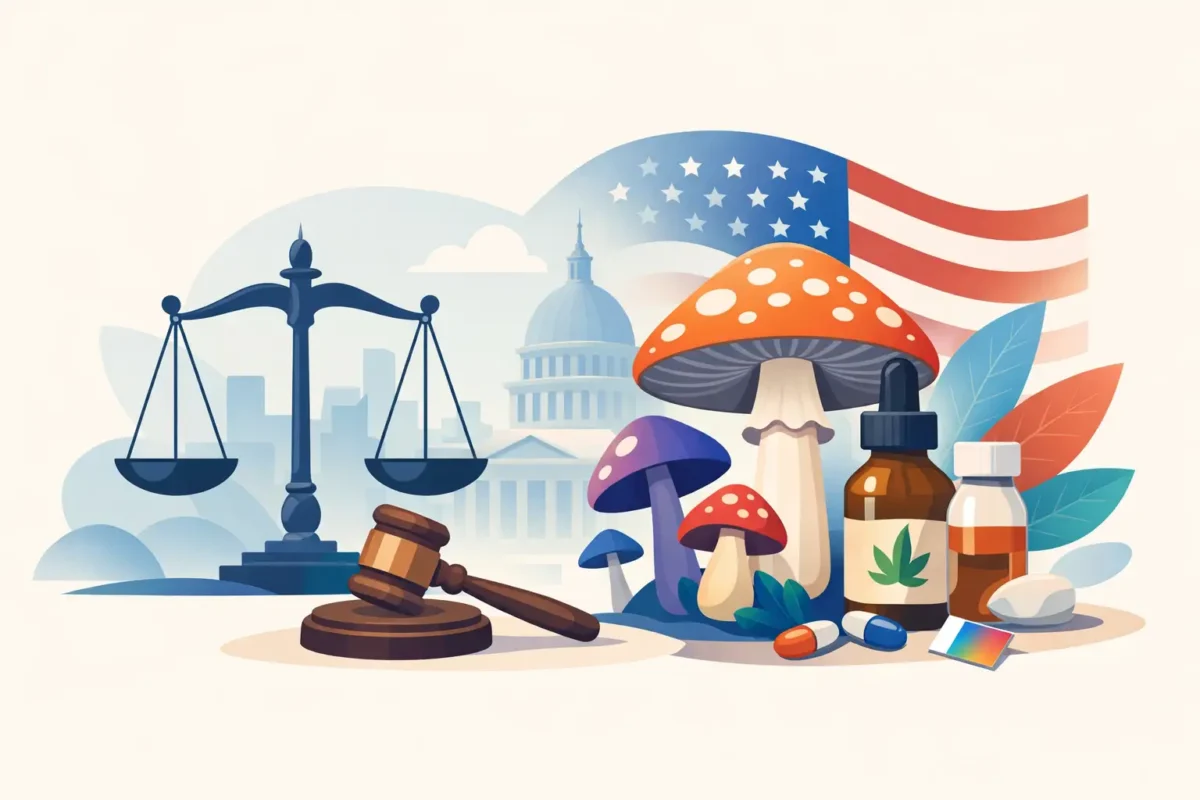
Legal Psychedelics in the USA: The Real Rules

Legal Psychedelics in the USA: The Real Rules

A product label, a social-media post, or a website claiming nationwide delivery does not make a substance legal. For adults looking into legal psychedelics in the USA, the first rule is simple: legal status depends on the exact substance, the state and city, the reason it is being used, and whether federal law applies.

That can feel frustrating when the market uses broad phrases like “legal shrooms,” “legal DMT,” or “research products.” But these labels often blur major legal differences. A substance can be decriminalized without being legal to sell. It can be available in a clinical study without being approved by the FDA. It can be lawful under a narrow state program while remaining illegal to possess, ship, or sell across state lines.

No hype, no guesswork. Here is what the rules actually mean.

Legal Psychedelics in the USA Are a Narrow Category

At the federal level, most well-known classic psychedelics remain controlled substances. Psilocybin and psilocin, LSD, DMT, mescaline from peyote, MDMA, and ibogaine are generally listed in Schedule I under the federal Controlled Substances Act. That classification means federal law treats them as having no accepted medical use and a high potential for misuse, even though research and public policy debates are moving quickly.

Schedule I status has practical consequences. It means a state decision to decriminalize a substance does not automatically authorize commercial retail sales, interstate shipping, online purchasing, or mailing products through the postal system. Federal enforcement priorities can vary, but the underlying federal restriction does not disappear because a seller calls an item legal.

A few substances and settings sit outside that simple rule. Ketamine is a controlled prescription medication, not a federally legal over-the-counter psychedelic product. Esketamine is an FDA-approved prescription treatment used under specific medical requirements. Some religious organizations may seek legal protections for sincere sacramental practices, but that is not a blanket public exception for buying or selling controlled substances.

Decriminalized Is Not the Same as Legal

This is where most confusion starts. Decriminalization usually means a jurisdiction has reduced penalties or made enforcement a low priority for certain personal activities. It does not necessarily create a regulated marketplace. It also does not mean every related activity is permitted.

For example, a local policy might reduce penalties for personal possession of certain natural psychedelics. That same policy may still leave manufacturing, commercial sales, driving while impaired, distribution to minors, and public consumption prohibited. State laws can also override or limit city-level changes.

Legalization is different. A legalized system normally creates explicit rules around who may provide a substance, where services can happen, age limits, testing, licensing, taxes, packaging, and enforcement. Even then, the program may be limited to supervised services instead of take-home retail products.

The distinction matters because “decriminalized” is often used in advertising as if it means “safe to order anywhere.” It does not. Buyers should treat that claim as a prompt to verify the actual law, not as proof.

Where Psilocybin Laws Have Changed

Oregon created a regulated psilocybin services framework for adults 21 and older. Its model is based on licensed service centers, trained facilitators, and supervised sessions. It is not a broad authorization for ordinary retail mushroom sales, personal shipment, or recreational use anywhere in the state.

Colorado has also passed statewide natural medicine reforms. The legal framework is more permissive than most states for certain personal-use activities involving specified natural medicines, but it still has boundaries. Commercial activity is regulated, access can be location-specific, and federal law continues to apply.

Several cities have adopted deprioritization or decriminalization policies involving entheogenic plants and fungi. Those policies differ sharply from one place to another. Some apply only to enforcement priorities. Some exclude sales. Some have been changed, challenged, or limited after passage.

The practical takeaway is direct: never assume that a headline about Oregon, Colorado, or a particular city applies to your address, your intended activity, or a package crossing state lines.

Psilocybin spores require extra care

Mushroom spores are often discussed separately because spores generally do not contain psilocybin or psilocin. In some jurisdictions, possession for microscopy or taxonomy may be treated differently from possession of cultivated psychedelic mushrooms. That does not make cultivation lawful where psilocybin mushrooms are prohibited.

State-specific rules can be unusual, and the legal line can change based on intent and what occurs after purchase. Anyone considering spores should understand the law where they live and avoid treating a “for microscopy” label as a loophole or legal guarantee.

What About Hemp, Amanita, and “Mushroom” Edibles?

Not every product marketed with psychedelic language contains a federally controlled classic psychedelic. That does not mean every product is legal, accurately labeled, or low risk.

Hemp-derived cannabinoids are one of the biggest examples. Federal hemp rules created a narrow category for hemp and certain derivatives, but state rules on Delta-8 THC, intoxicating hemp products, synthetic cannabinoids, and edible limits vary widely. A product may be sold openly in one state and restricted in another. Labels can also be confusing when a gummy contains multiple compounds or when the total THC calculation is unclear.

Amanita muscaria products are another heavily marketed category. Amanita mushrooms do not contain psilocybin, but they can produce psychoactive effects through different compounds. Their legal status is not a universal green light, and product quality is a serious concern. Effects can be unpredictable, especially with edibles, extracts, or products that do not clearly disclose ingredients and doses.

Some “mushroom chocolate” or “legal trip” products have raised additional questions because labels may not fully match what is inside. A package design, flavor name, or botanical claim is not a substitute for transparent ingredients, batch testing, and lawful compliance. If a label is vague about active compounds, makes medical promises, or avoids basic dosing information, that is a reason to step back.

FDA Approval, Research, and Medical Claims

Research into psilocybin, MDMA, DMT, ibogaine, and related compounds is real. Universities, hospitals, and pharmaceutical companies are studying potential applications for depression, PTSD, addiction, pain, and end-of-life distress. Research progress, however, is not the same thing as legal consumer access.

As of now, there is no general FDA approval allowing consumers to buy classic psychedelics online for self-treatment. Claims that a controlled psychedelic is “medicine,” “therapy,” or “FDA approved” should be checked carefully. Medical marketing can sound convincing while leaving out the difference between an early-stage study, an investigational treatment, a state-regulated service, and a prescription drug.

Ketamine is legally available only through licensed medical channels. Its legal status does not make unregulated ketamine products legitimate, and it does not make other substances legal by comparison. The same goes for clinical trials. Participation usually involves screening, informed consent, medical oversight, and strict eligibility requirements, not a retail checkout page.

How to Evaluate a Legal Claim Before You Act

The fastest way to avoid a costly mistake is to get specific. Do not ask only, “Are psychedelics legal?” Ask which compound is involved, what exact form it takes, where it is located, and what activity is proposed: possession, purchase, cultivation, use, transport, sale, or medical treatment.

Four warning signs deserve attention:

  • A seller claims a Schedule I substance is legal in all 50 states.
  • A product is presented as “research only” while being promoted for human consumption.
  • The site relies on vague lab-testing claims but does not clearly identify the substance or batch information.
  • The business promises discreet shipping as if privacy changes federal or state law.

Privacy may matter to consumers, but it is not a legal defense. Neither are cryptocurrency payments, unusual packaging, or disclaimers buried in product descriptions. A legitimate legal claim should be able to explain the actual rule without hiding behind buzzwords.

Make Health and Safety Part of the Decision

Legality is only one part of the picture. Psychedelic and psychoactive products can affect judgment, coordination, heart rate, mood, perception, and decision-making. Risks may be higher for people with a personal or family history of psychosis or bipolar disorder, people taking psychiatric medications, people with heart conditions, and anyone combining substances with alcohol or other drugs.

Do not drive, operate machinery, or make major decisions while impaired. If someone experiences chest pain, seizures, severe agitation, dangerous confusion, loss of consciousness, or thoughts of self-harm, seek urgent medical help. In an emergency, clear information about what was taken helps clinicians provide safer care.

The market moves fast, but the law moves unevenly. The smart move is not to chase the loudest “legal” claim. Check the current rules where you are, separate decriminalization from legalization, and treat transparent information as the minimum standard before making any decision.

Leave a Reply

Your email address will not be published. Required fields are marked *

WhatsApp chat