
Uncategorized
Psychedelic Mental Health Contraindications
Sep
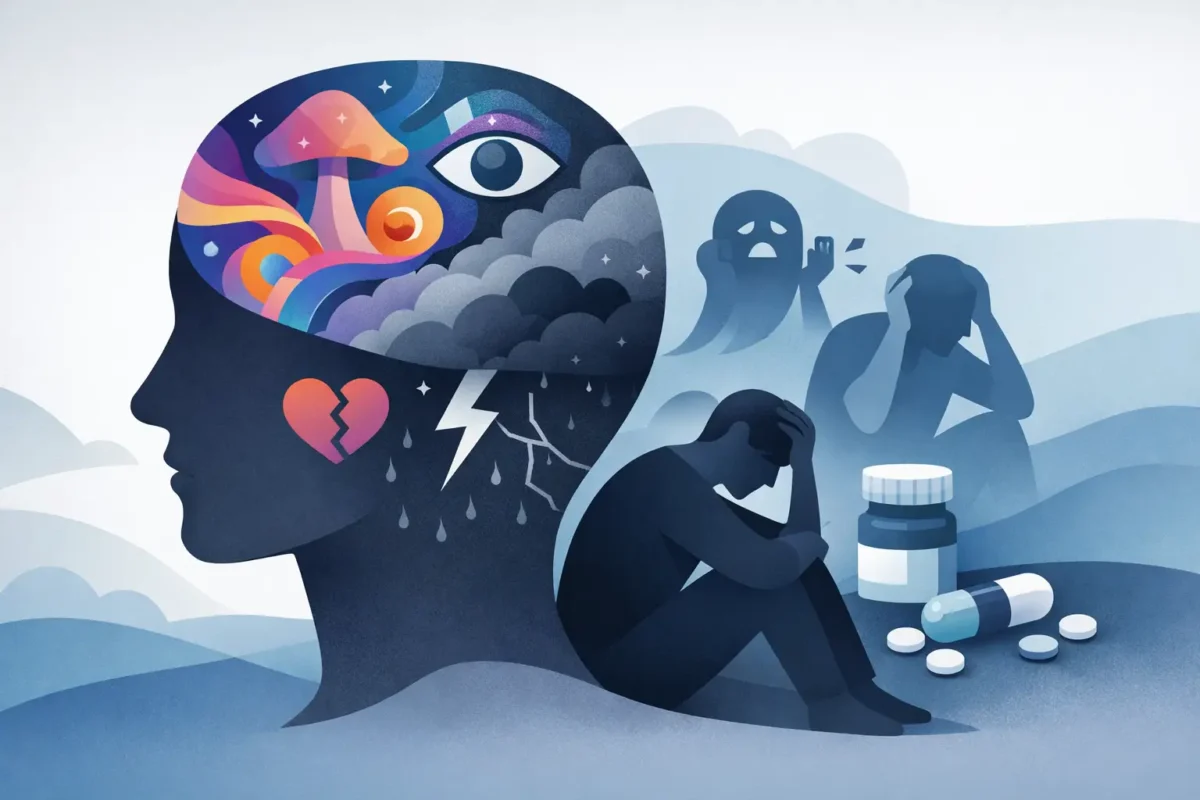
A powerful experience is not automatically a safe experience. Psychedelic mental health contraindications are the part of the conversation people skip when they focus only on visuals, insight, mood, or a product’s reputation. Your current mental health, past episodes, family history, medications, and support system can all change the risk.
This is not fear marketing. It is straight harm-reduction information for adults who are considering psychedelic substances, dissociatives, mushroom edibles, or other psychoactive products. If there is a serious concern in your history, the smartest move is to pause before acting, not to push through because a friend had a positive trip.
What psychedelic mental health contraindications mean
A contraindication is a reason a substance, treatment, or activity may be unsafe for a particular person. It does not always mean risk is guaranteed. It means the risk may be high enough that self-experimenting is a bad bet, especially without a qualified clinician who knows your full history.
Psychedelics can intensify emotion, sensory perception, thought patterns, and suggestibility. For some people, that can feel meaningful or manageable. For someone with a vulnerability to psychosis, mania, severe panic, dissociation, or destabilizing trauma symptoms, the same intensity can become confusing, frightening, or dangerous.
The substance matters. Dose, setting, sleep, mixing substances, and an unexpected potency difference matter too. But a difficult reaction is not always about taking “too much.” A person can have a severe psychiatric reaction at an amount that another person describes as mild.
Personal or family history of psychosis
A history of psychosis is one of the clearest red flags. This includes schizophrenia spectrum disorders, schizoaffective disorder, delusional disorder, past substance-induced psychosis, or episodes involving hallucinations, paranoia, disorganized thinking, or losing touch with reality.
Classic psychedelics such as psilocybin and LSD can produce temporary perceptual and cognitive changes by design. In a person already vulnerable to psychosis, those changes may aggravate symptoms, trigger an episode, or make recovery harder. DMT and potent psychedelic analogs are not exceptions simply because the experience is shorter.
Family history also deserves real weight. If a parent, sibling, or close biological relative has schizophrenia, schizoaffective disorder, or recurrent psychotic episodes, do not treat that information as irrelevant. It does not prove that you will develop psychosis, but it can indicate a higher underlying vulnerability.
Anyone who is currently hearing voices, feeling intensely watched, having fixed beliefs others cannot verify, or becoming severely suspicious should avoid psychoactive experimentation and seek urgent professional evaluation. If there is immediate danger, inability to care for yourself, or risk of harm to anyone, call 911 or 988 in the United States.
Bipolar disorder and mania risk
Bipolar I disorder, bipolar II disorder, cyclothymia, and any past manic or hypomanic episode require caution that goes beyond ordinary “set and setting” advice. Mania can involve decreased need for sleep, racing thoughts, impulsive choices, grandiosity, agitation, risky spending, and behavior that feels unusually certain or invincible.
Psychedelics may disrupt sleep and intensify mood states. That combination can be especially risky for people with bipolar vulnerability. A person may feel energized and brilliant during or after an experience while friends or family notice escalating behavior, paranoia, or a sharp break from normal judgment.
A family history of bipolar disorder matters here as well, particularly if there have been hospitalizations, psychosis during mood episodes, or severe mood swings. Do not assume that feeling depressed today eliminates mania risk tomorrow.
Active anxiety, trauma, and dissociation
Anxiety and depression are not automatic disqualifiers. The details matter. Someone with stable symptoms, ongoing care, and a clinician who understands their history is in a very different position from someone in the middle of a panic spiral, a major depressive crash, or a traumatic life event.
Psychedelics can amplify what is already present. If your baseline is constant dread, intrusive memories, severe insomnia, or emotional overwhelm, an altered state may not create relief. It may magnify the material you are already struggling to contain.
Dissociation deserves special attention. Feeling unreal, detached from your body, emotionally numb, or disconnected from surroundings can be part of trauma-related conditions, panic disorders, depression, and other mental health concerns. Psychedelic and dissociative substances can deepen those sensations. For some people, that is not insight. It is destabilization that lingers after the drug wears off.
If you have recently self-harmed, have active suicidal thoughts, or are unable to reliably stay safe, do not use a psychedelic alone or as a substitute for urgent care. Contact 988, a crisis team, an emergency department, or someone who can stay with you and help you reach care.
Medication interactions are not a guessing game
One of the biggest mistakes is stopping psychiatric medication abruptly because someone online said it would make a psychedelic experience stronger. Abruptly stopping antidepressants, antipsychotics, mood stabilizers, benzodiazepines, or other prescribed medicines can cause withdrawal, relapse, rebound anxiety, insomnia, or dangerous mood changes.
Lithium is a major concern. Reports of seizures and severe adverse reactions have been associated with combining lithium and classic psychedelics. This is not a combination to test casually.
MAOIs require particular care because they can interact with many prescription drugs and substances. They are relevant to ayahuasca-style preparations and some DMT contexts. Mixing MAOIs with certain antidepressants, stimulants, opioids, cough medicines, or other drugs can create serious toxicity, including serotonin syndrome.
SSRIs, SNRIs, antipsychotics, and benzodiazepines may alter effects, but there is no universal rule that they make use safe, unsafe, stronger, or weaker. The right question is not, “What do people say online?” It is, “What does my prescriber say based on my diagnosis, medication, and medical history?”
Other conditions that can raise psychiatric risk
Mental health does not sit apart from the rest of the body. Sleep deprivation, stimulant use, heavy alcohol use, cannabis-related paranoia, and chronic stress can lower a person’s ability to cope with an intense state. Mixing substances also makes it much harder to identify what caused a bad reaction.
Be especially cautious if you have had a previous frightening reaction to cannabis, psychedelics, MDMA, ketamine, stimulants, or high-dose edibles. A prior panic attack, paranoid episode, blackout, or prolonged confusion is useful information, not something to dismiss as “just a bad batch.”
Age and life stage matter too. Adolescents and young adults may have emerging mood or psychotic disorders that have not yet been diagnosed. Pregnancy, postpartum mood symptoms, and major hormonal transitions also call for medical guidance rather than online reassurance.
Questions worth answering honestly
Before considering any psychoactive experience, slow down and ask whether you have ever had mania, psychosis, severe dissociation, psychiatric hospitalization, or a substance-related mental health crisis. Ask whether close relatives have had bipolar disorder or psychotic disorders. Consider whether you are sleeping normally, emotionally stable, and able to access help if things go wrong.
Also ask what medications and substances are in your system, including supplements, cough products, alcohol, cannabis, stimulants, and prescription drugs. “Natural,” “legal,” or sold as an edible does not remove interaction risk. Label accuracy and potency can vary, and a delayed edible effect can lead people to take more before the first amount has fully hit.
A trusted sober support person can be helpful, but they are not a replacement for clinical screening. If your history includes any major red flag, speak with a psychiatrist, prescribing clinician, or licensed mental health professional who can assess the full picture. Be honest about what you are considering. Their job is to reduce harm, not to shame you.
When to get help after a difficult experience
Some anxiety, fatigue, or emotional sensitivity can happen after an intense experience. Persistent symptoms deserve attention. Seek professional care promptly if paranoia, hallucinations, severe depression, insomnia, panic, confusion, or detached feelings continue beyond the immediate intoxication period or interfere with work, relationships, sleep, or basic self-care.
Treat an escalating crisis as a health issue, not a personal failure. A clear account of what was taken, when it was taken, what else was used, and what symptoms started can help medical staff respond safely. The strongest move is protecting your mind before an experience, and getting real support quickly if your mind does not return to baseline afterward.

