
Uncategorized
How to Verify Supplement Ingredients Before You Buy
Aug
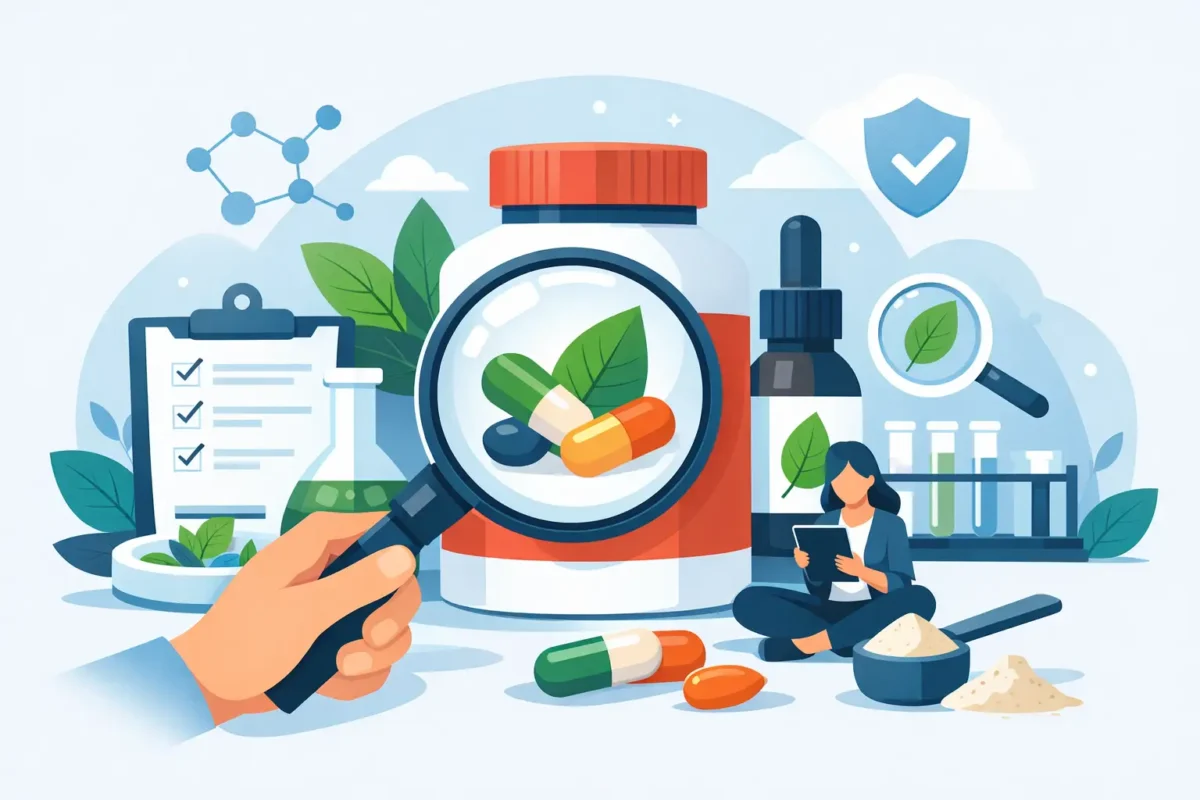
A glossy label, a trendy ingredient, and a big promise do not prove a supplement is worth taking. Knowing how to verify supplement ingredients helps you separate legitimate wellness products from underdosed formulas, vague blends, and products that hide behind marketing language. Before you spend money on capsules, powders, tinctures, or gummies, make the label do the work.
Start With the Supplement Facts Panel
The front of a bottle is advertising. The Supplement Facts panel is where the useful information should live. Look for every active ingredient, the amount per serving, serving size, and whether those amounts are listed in milligrams, micrograms, international units, or another measurable format.
A product that says it contains Lion’s Mane, magnesium, ashwagandha, or vitamins is not automatically transparent. You need to know how much is actually in the serving. “Contains 10 powerful ingredients” is not a meaningful claim if the amounts are missing or buried in a blend.
Check the suggested use, too. A label may advertise a large number on the front while that amount only applies to two, four, or six capsules. That does not make the product bad, but it changes the real cost and convenience of using it as directed.
How to Verify Supplement Ingredients on the Label
First, compare the exact ingredient name with what the brand claims on the front. If a bottle promotes a specific mushroom species, botanical extract, amino acid, or vitamin, that ingredient should appear clearly in Supplement Facts. Watch for broad wording such as “mushroom complex,” “herbal matrix,” or “wellness blend” when the front label makes a very specific promise.
For plant and mushroom products, details matter. A label should identify the species and, when relevant, the plant part used. For example, “Lion’s Mane mushroom” leaves questions unanswered compared with a label that identifies the species, whether it uses fruiting body or mycelium, and whether it is an extract.
Extraction information can also be useful, but do not treat it as automatic proof of quality. A 10:1 extract ratio sounds impressive, yet it does not tell you the starting-material quality, the final active compounds, or whether the listed ratio is meaningful. Standardized amounts of relevant compounds can provide more clarity when they are appropriate to the ingredient.
Be Careful With Proprietary Blends
Proprietary blends are one of the fastest ways to hide a weak formula. They list several ingredients under one combined total, so you cannot see the dose of each ingredient. A blend may contain an attractive headline ingredient, but only in a tiny amount.
A proprietary blend is not always unsafe. Some brands use them to protect a formula. Still, it makes independent evaluation harder. If you are buying a supplement for a particular ingredient or outcome, a fully disclosed formula gives you more control and fewer surprises.
Ask for a Lot-Specific Certificate of Analysis
A certificate of analysis, often called a COA, is one of the strongest pieces of evidence a seller can provide. It should be tied to the specific lot or batch of the product, not a random sample from years ago or a generic document with no identifying details.
A useful COA typically includes the product name, batch or lot number, test date, laboratory name, sample information, and results. The lot number on the COA should match the lot number printed on the bottle, pouch, or box in your hands. If it does not match, treat the document as marketing, not verification.
For many supplements, testing should address identity and potency. Identity testing asks whether the ingredient is what the label says it is. Potency testing checks whether the claimed amount is actually present. Depending on the product, contaminant testing may also matter just as much.
Look for screening relevant to the formula, including heavy metals, microbial contamination, pesticides, residual solvents, and mycotoxins where applicable. A clean-looking package cannot tell you whether a botanical powder was contaminated during growing, processing, or storage.
Check Who Performed the Testing
Not every lab report carries equal weight. A report from an independent, qualified laboratory offers more reassurance than an in-house spreadsheet or a badge that simply says “lab tested.” The name of the lab should be visible, and the report should look like a real testing document rather than a cropped image with only a passing result.
Be skeptical of COAs that show no methods, no batch number, no dates, or only a single favorable test result. Also question documents that list unusually perfect numbers without a range, measurement units, or explanation of what was tested.
Third-party testing is a strong positive sign, but it is not a magic shield. It depends on what was tested, when it was tested, and whether the sample genuinely represents the batch being sold. The best approach is to assess the COA alongside the label and the company’s transparency.
Verify the Brand, Not Just the Bottle
A supplement can have an attractive formula and still raise concerns if the company behind it is impossible to identify. Look for a real business name, customer support contact, manufacturing information, and clear policies. A brand that refuses basic questions about ingredients, batch testing, or allergens is giving you useful information, just not the kind you want.
Manufacturing claims deserve the same level of scrutiny. “Made in a GMP facility” can be a positive signal, but it is not identical to a guarantee of purity or effectiveness. Good Manufacturing Practices refer to production controls. They do not prove every ingredient is potent, every claim is supported, or every batch has been independently tested.
Check for basic consistency across the product page, package, and COA. If the ingredient amounts, serving sizes, or product names conflict, pause before buying. Sloppy details can signal a sloppy supply chain.
Watch for Claims That Outrun the Evidence
Supplements are not approved like prescription drugs before they reach store shelves. That means the buyer has to be more alert. Claims such as “cures anxiety,” “reverses disease,” “works instantly,” or “guaranteed results” should set off alarms, especially when they are attached to a product with limited ingredient disclosure.
Wellness supplements can support a routine, but they are not a substitute for medical care, sleep, nutrition, or a thoughtful treatment plan. A responsible seller should not pressure you to replace prescribed medication or ignore a health condition.
Be especially cautious with formulas marketed for mood, sleep, energy, weight loss, sexual performance, or intense cognitive effects. These categories are more likely to attract exaggerated claims and ingredients that may interact with medications. If you are pregnant, nursing, managing a condition, or taking prescriptions, talk with a qualified clinician or pharmacist before adding a new supplement.
Check Allergens, Fillers, and the Full Ingredient List
The active ingredient is only part of the formula. Turn the bottle over and read the “Other Ingredients” section. Capsules may contain gelatin or plant cellulose. Gummies may contain sugar alcohols, colors, gelatin, or common allergens. Powders can include flavors, sweeteners, flow agents, and stimulant ingredients that are easy to overlook.
This is not about avoiding every filler at all costs. Some inactive ingredients are necessary for stability, consistency, flavor, or capsule production. The question is whether they are clearly disclosed and suitable for you.
If you have allergies or dietary restrictions, look for direct statements about major allergens, gluten, soy, dairy, and animal-derived ingredients. “Vegan,” “non-GMO,” and “natural” can be useful descriptors, but they do not replace a complete ingredient list.
A Quick Pre-Buy Verification Routine
Before checking out, use a simple four-part filter: read the Supplement Facts panel, confirm exact dosages, request or locate a lot-specific COA, and assess whether the company answers direct questions clearly. If a product fails one part, you do not need to talk yourself into buying it because the sale looks good.
Price is part of the equation, but the cheapest bottle is not always the best deal. A lower-priced product with unclear dosing, vague sourcing, or no meaningful testing can cost more in the long run than a transparent formula you can actually evaluate.
The strongest supplement purchase is not the one with the loudest promise. It is the one that gives you enough clear, batch-level information to make your own decision with confidence.

